Equipment and operating figures
Figures describe the configuration and operating conditions in this case.
- Egg conveyor
- 7400 Series; 28 feet long × 16 inches wide
- Packing interval
- Approximately every 10 seconds
- Working schedule
- 10 hours daily, 4 days weekly
- Reported processing times
- 60 minutes before; 8 minutes after
- Empty-can conveyor
- 7400 Series; 93 feet long × 6 inches wide
- Source washdown range
- 100–1,500 PSI for the described bearing arrangement
The process sequence
- Keep cooked egg halves and yolks separate
- Index through preparation
- Present product for timed packing
- Clean the return belt
- Feed empty cans along a separate route
A conveyor inherited from a different food process
The company made refrigerated and canned foods, salads, dips, spreads and meal kits. Its devilled-egg line was still using equipment inherited from chicken processing, which was not a good match for the newer duty.
As part of a move toward leaner production, the operation wanted both better sanitation and more control over the pace of work. It also needed to handle cooked egg halves separately from the yolks used in preparation.
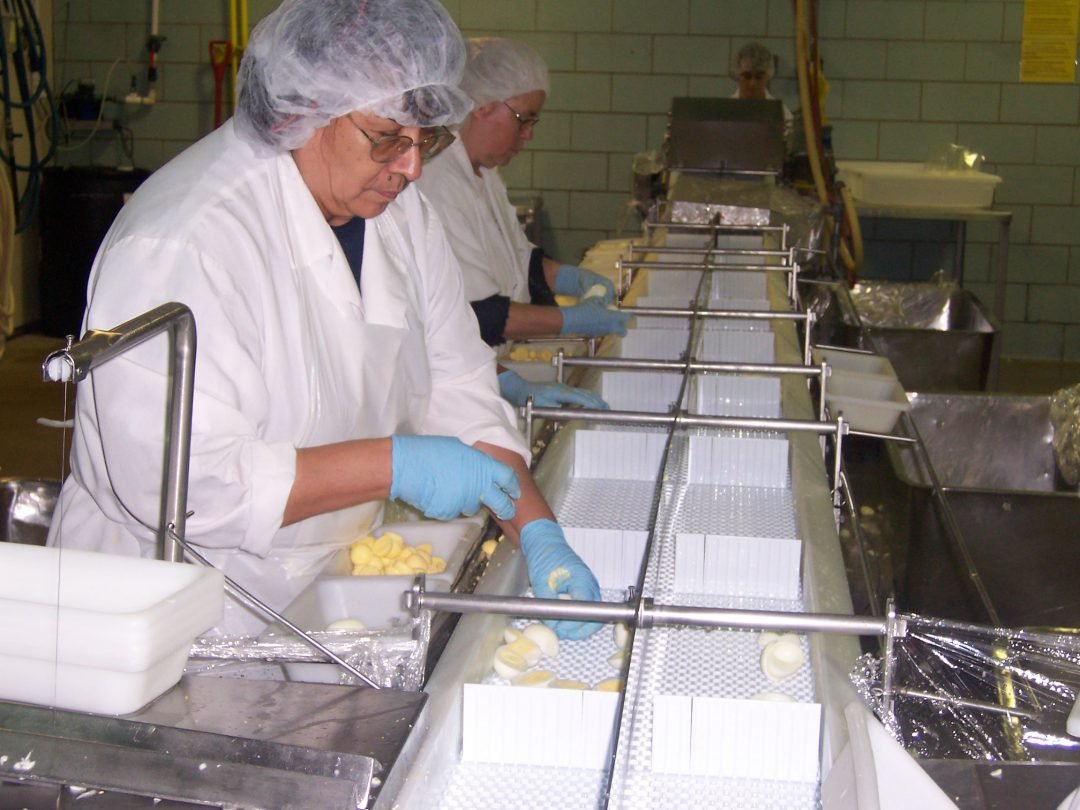
A sanitary stainless 7400 Series conveyor was configured with indexed motion. The conveyor rhythm then set the line pace rather than leaving output entirely dependent on the speed of individuals at each position.
Indexed work and the reported processing change
The replacement conveyor was twenty-eight feet long and sixteen inches wide. Its indexing also coordinated packing at the end of the process, which took place at approximately ten-second intervals.
The account reports an average elapsed processing time of sixty minutes previously and eight minutes with the revised arrangement.
The published before-and-after times are retained as reported observations. They are not presented as a general conveyor speed rating or a guaranteed time reduction for other food lines.
Cleaning during operation and at shutdown
The line operated ten hours a day on four days each week. Jets beneath the return side applied a mixture of water and cleaning agent to the passing belt during operation.
The stainless conveyor construction avoided fasteners in the food zone. The source described 400-series stainless bearings for daily high-pressure washing in a range of 100 to 1,500 PSI and a platform that one person could open without tools in a matter of minutes.
Those pressure figures belong to the historical equipment description. A new installation's wash pressure, chemistry and method must suit its actual components and sanitation procedure.
A separate route for empty cans
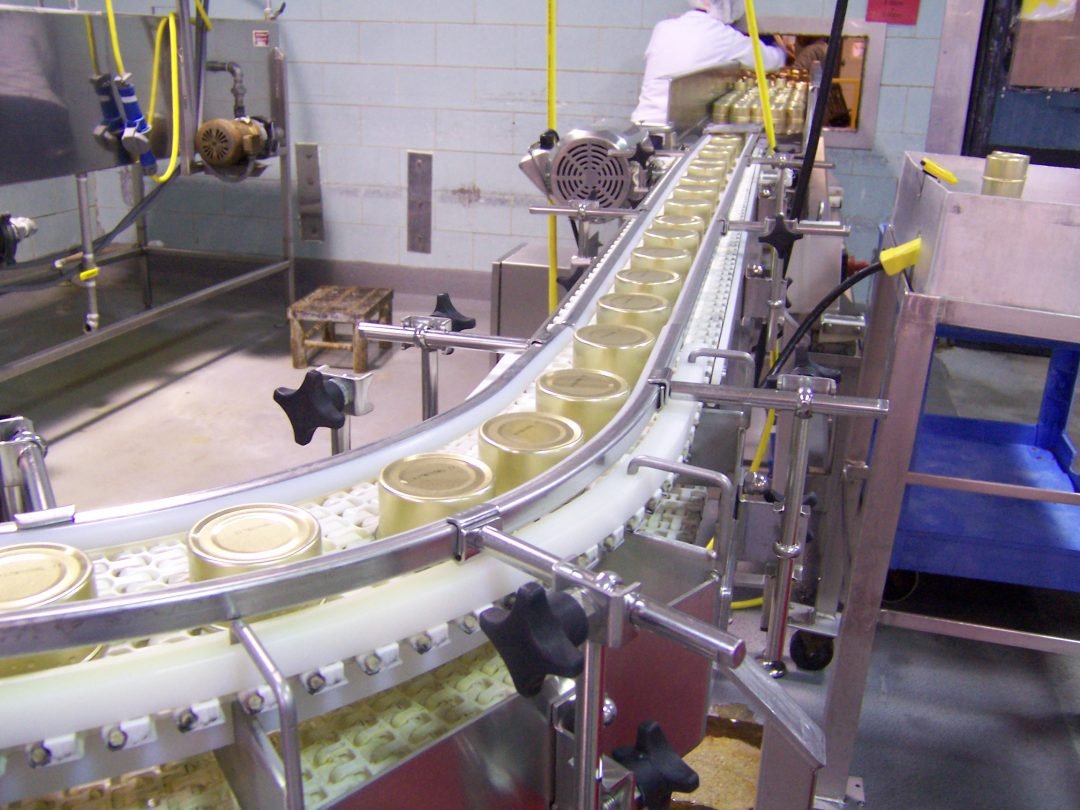
A second 7400 Series conveyor fed empty cans from a staging area to packaging. It was six inches wide and ninety-three feet long, following walls and elevating around obstacles along the route.
This can-feed conveyor also operated ten-hour days, four days each week. The project was delivered within a short implementation window, and after almost a year the customer reported that both conveyors were meeting its needs.
The two installations solved different problems: paced handling of food on one line and a long, space-constrained container supply route on the other.
Application photographs