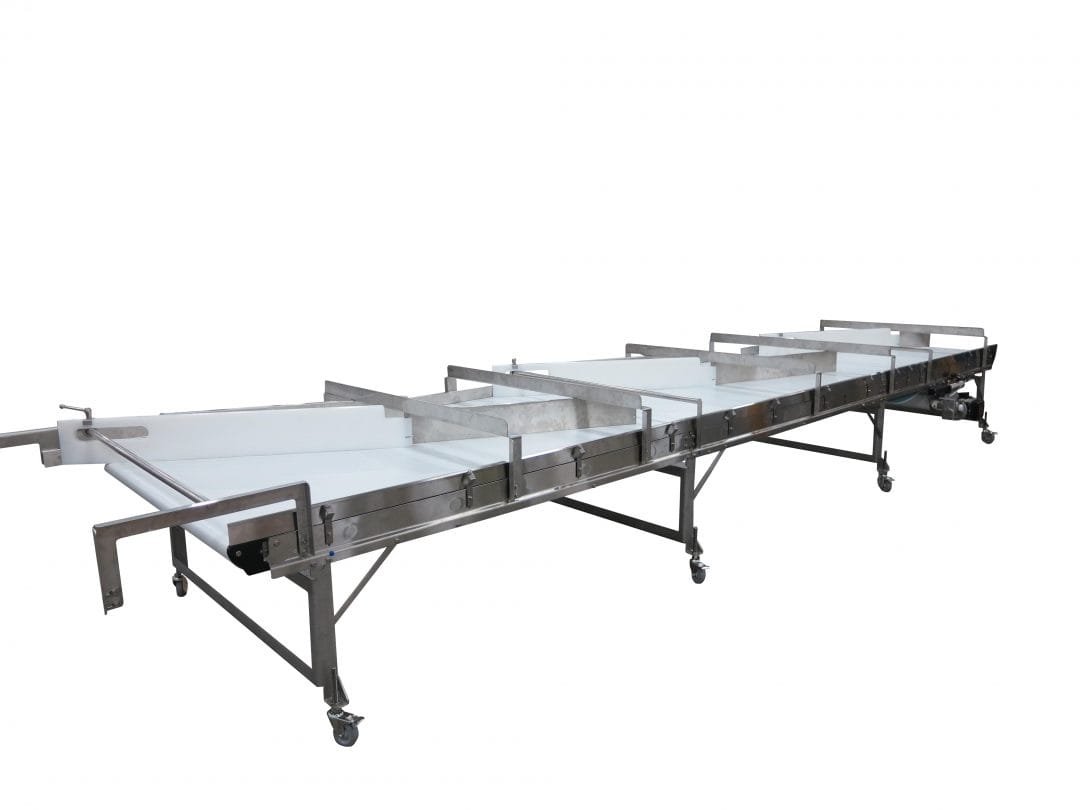
Equipment and operating figures
Figures describe the configuration and operating conditions in this case.
- Pouch size
- Large-format bags up to 36 inches tall
- Infeed
- 3200 Series conveyor
- Conveyor dimensions
- 10 feet long × 4 feet wide
- Belt features
- Friction selected by testing; V-guided tracking
- Adjustment
- Rack-and-pinion belt tensioning
- Complete machine capacity
- Up to 60 bags per minute
- Historical machine installation period
- About 16 weeks from order
The process sequence
- Load stacks manually or automatically
- Index the next stack
- Vacuum-pick one pouch
- Orient and space the pouch
- Apply the closure
A specialised closure machine
The machine builder made equipment for plastic bags, pre-made pouches and reclosable packaging used in applications such as bread, retail merchandise, hygiene and deli products. This project addressed large-format pouches, including bags up to thirty-six inches tall.
Its post-applied-slider machine added a closure to the top of an already-made pouch. Smaller-pouch machines existed, but scaling the process required a dependable way to feed the larger flexible material. Taking the infeed conveyor out of the internal design workload allowed the engineers to focus on the machine's more specialised closure operations.
Indexing stacks for overhead vacuum picking
Stacks of pouches could be placed on the conveyor by hand or by an upstream automated process. An overhead vacuum transfer removed one pouch at a time. Several stacks could wait on the belt, with indexed conveyor movement presenting the next stack as space became available.
The plastic pouch surfaces were slippery, so the belt's coefficient of friction mattered. Samples of several belt types were tested against the actual material before the final selection was made. That removed much of the uncertainty about whether the loaded stacks would move as intended.
After vacuum pickup, each pouch was oriented and spaced for application of the closure mechanism. Conveyor indexing, material grip and the downstream handling sequence therefore had to work together.
Conveyor configuration and machine performance
The 3200 Series infeed was ten feet long and four feet wide. Its low-profile construction supported transfers, accumulation and precise part movement within the larger machine. V-guided belting addressed tracking, while rack-and-pinion tensioning allowed belt changes and adjustment.
The engineer reported that specifying this conveyor saved development time and was cost-effective, leaving the internal team available to design other machine components. The source records a conveyor supply capability of under five days at the time; it is retained here only as historical implementation context.
The completed machine could process up to sixty bags per minute, with an order-to-installation period of about sixteen weeks. Those figures describe the complete pouch machine and its project schedule, not the standalone conveyor's guaranteed output or present delivery time.