Equipment and operating figures
Figures describe the configuration and operating conditions in this case.
- Conveyor
- 2200 Series
- Dimensions
- 10 feet long × 6 inches wide
- Respirator materials
- Medical-grade silicone and polypropylene
- Reported line output
- About 3,000 respirators/day
- Historical supply event
- Specified and collected on the same day
The process sequence
- Complete the respirator
- Apply disinfectant
- Carry beneath an air knife
- Dry and perform final cleaning
- Bag for shipment
An urgent change in manufacturing purpose
During the COVID-19 emergency, a business normally producing hydraulic and electromechanical components diverted part of its production capacity to reusable N95 respirators. The wider effort brought together local businesses to help supply healthcare personnel and first responders.
The particular process gap was between a final disinfection step and a bagging machine. A suitable transfer was needed quickly so completed respirators could reach packaging in the intended condition.
The drying and packaging sequence
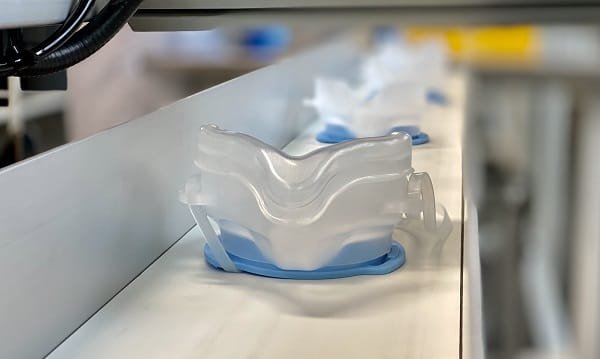
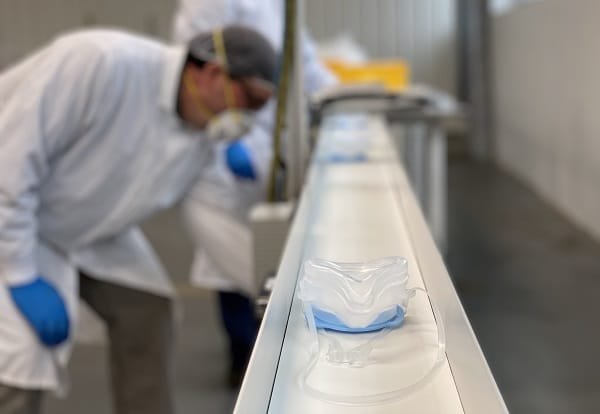
A ten-foot-long, six-inch-wide 2200 Series conveyor was selected. Completed respirators received disinfectant before the belt carried them beneath an air knife for drying and a final cleaning step.
From there, the masks entered a bagger and were packaged for shipment. The conveyor provided controlled transport through the air stream and into the next machine rather than being the device that manufactured or certified the respirator itself.
The source describes the platform's wider suitability for small-part transfer, accumulation, inclines, assembly and packaging. This installation used it for the specific drying-to-bagging duty described above.
Historical response and production context
The equipment was identified, prepared and collected on the same day, Friday 3 April, during the emergency response. That unusual historical supply event explains the urgency of the project. It is not a standing promise of same-day availability for a new order.
The respirator described used medical-grade silicone and polypropylene, formed a low-pressure facial seal and could be sanitised for reuse. The line was reported to produce about three thousand respirators daily.
Those details describe the product and complete production effort. The case illustrates a practical connection between a process treatment and final packaging during a time-sensitive capacity change.
Application photographs